DECISION MADE:
You have chosen:
Handling Confrontation
Confrontations within clinical practice will allude to an underlying issue- especially the disproportionate examples you might be able to think of not shown in this example. One way of reframing a confrontative style is that the patient is engaged with their health and likely to stick to an evidenced approach if we can take their perspective into account.
Ask yourself what's behind the behaviour- sometimes this will be clear through active listening- other times this will need clinical curiosity to explore the underlying belief or emotion- be it fear, anger or pain- accommodating for a factor in their health-seeking behaviour allows the opportunity for the patient to disclose openly what is troubling them. This shared understanding is explored in the JoHari Window, with the aim of increasing what information is in the 'Public Area' or Arena through disclosure.
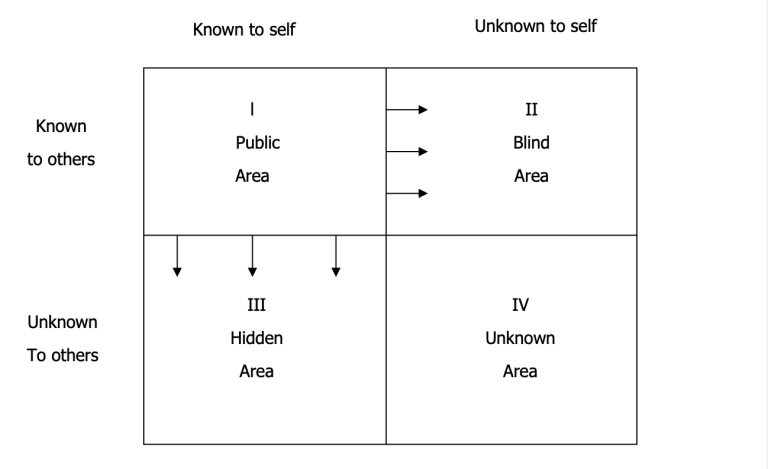
Here the GP responds in a Consumerist style and loses a sense of organisation and structure within the consultation- the dynamic isn't one of an Adult-Adult interaction and the consultation becomes dysfunctional as a result.
SCA Feedback Statements
Data gathering was unsystematic and or disorganised
Examiners did not feel that the consultation had a logical structure.
Consultations are not scripted or linear, it is often necessary to return to aspects of data gathering or test new hypotheses as information comes to light. The consultation is a conversation between two people and as such, may be unpredictable.
However, your data gathering may have appeared disjointed, your questioning failing to show a reasoned way of thinking. The consultation may have appeared disorganised or even chaotic, with some elements apparently occurring at random. This gives the impression of a doctor who may miss important clinical issues because he/she is not systematic; or one who is at a loss for what to ask.
For example, for a patient with long COVID, a systematic approach to their symptoms, rather than a ‘scattergun’ enquiry of irrelevant, disjointed questions may be more helpful both diagnostically and therapeutically. It may seem topsy-turvy or presumptuous to give a diagnosis before data has been gathered. Or to agree to a prescription prior to establishing safety.
Aim for a stepwise approach to systematically gather information, focus your enquiry and target questions to the problem.
Suggestions
Consider the various GP consultation models (such as Neighbour, Pendleton or Cambridge-Calgary). Ask a colleague or your supervisor to critique the structure or organisation of your consulting.
Using open questions to explore the presenting features, before focussing on specific detail with closed questions, is often helpful.
Try signposting, where you signal to the patient what you are about to do. For example, ‘I would like to ask you some questions about your health in the past.’ If you should need to return to aspects of data gathering later in the consultation, consider saying, ‘I realise I need to return to some other questions now…’
Summarising also demonstrates that you are collating and processing the collected information; and is useful in allowing the patient to clarify anything misunderstood.
The management plan relating to prescribing of medication was inappropriate or not reflective of current practice
You are expected to show that your clinical management skills are in line with current UK best practice, making safe prescribing decisions, considering relevant drug interactions, dosing, and side effects. You may not have developed a plan at all, where a prescription was needed. You may have prescribed or failed to stop an inappropriate medication; or issued an incorrect dose. Or you may have prescribed when no prescription was necessary in this case.
This may also refer to the suggestion of over the counter (non-prescription) medication. For example, perhaps tamsulosin rather than finasteride would have been more suitable for a gentleman with LUTS, first line. Or when prescribing alendronic acid, advice about side effects and how to take should have been given, enhancing patient safety.
Suggestions
Your management plan should be coherent and feasible. You should be familiar with current national guidelines such as those published by NICE (National Institute of Clinical Excellence) and SIGN (Scottish Intercollegiate Guidelines Network).
Make a habit of referring to prescribing guidelines and/or the BNF after you have seen each patient at work. Where appropriate, consider other options before prescribing and be aware of the risks of polypharmacy and the need to deprescribe, too.
Get involved with the work of repeat prescribing in your surgery, complete your Prescribing Assessment for WPBA. Attend prescribing meetings at work with your team and community pharmacist.