
DECISION MADE:
You have chosen:
Fully informed consent for men without symptoms
An evolving decision to be shared
Much in this case may change as further evidence emerges from studies such as TRANSFORM trial, launched in the November after this consultation was recorded in February 2025.
At that time and until new information is received, the UK National Screening Committee does not recommend universal prostate screening for men using the PSA test.
It is not in doubt that checking PSA in enough men will save lives, but balancing the harms of investigations and treatments means that more men will be harmed through universal PSA Screening in men than those with lives saved. Latest Cancer Research data shows for every 2 lives saved through screening, another 20 men are harmed through the burden of diagnosis or harms of treatment they didn't need.
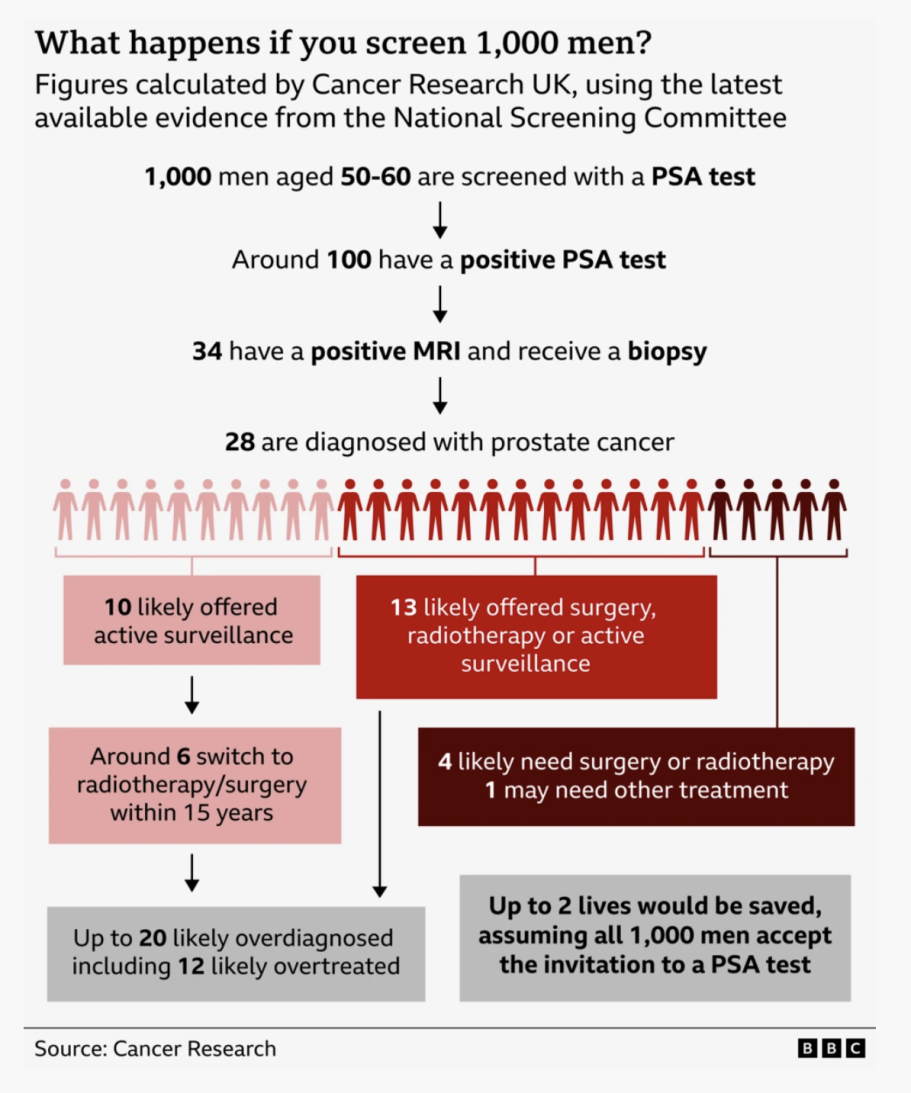
*Updated information after retirement of the
Prostate Cancer Risk Management Programme (PCRMP)
Benefits of PSA testing include:
- Early detection — PSA testing may lead to prostate cancer being detected before symptoms develop.
- Early treatment or entry into an active surveillance programme — detecting prostate cancer early before it progresses to cause morbidity or limit life expectancy.
Limitations and risks of PSA testing include:
- False-negative PSA tests — some authors quote a rate of up to 15% of those with a normal PSA level (less than 3 nanograms/mL) who may then subsequently develop prostate cancer.
- False-positive PSA tests — about 75% of people with a raised PSA level (3 nanograms/mL or higher) have a negative prostate biopsy.
- Unnecessary investigation — a false positive PSA test may lead to invasive investigations, such as prostate biopsy, and there may be adverse effects (for example bleeding or infection).
- Unnecessary treatment — slow-growing tumours are common and may not cause any symptoms or shorten life. Some tested men may therefore face unnecessary diagnosis (overdiagnosis) of prostate cancer, as well as associated anxiety, medical tests, and treatments with adverse effects.
- There is a particular risk of over-diagnosing and overtreating prostate cancer in men over the age of 79 where the prevalence is highest but the proportion of cancers which are clinically significant is lowest. For many patients in this group although they may have prostate cancer it will not cause symptoms or impact their life expectancy. Tests and treatment may cause additional risks and anxiety.